

Investing for the long term is one of the smartest ways to grow your wealth and secure your financial future. Unlike short-term investments, which focus on quick gains, long term investment plans are designed to help your money grow steadily over several years. By staying invested for the long term, you can take advantage of compounding returns, reduce the impact of market fluctuations, and achieve important financial goals
Long-term investment plans are ideal for anyone planning for retirement, children’s education, or building substantial savings. They provide a disciplined approach to saving and investing, helping you create a solid financial foundation. In this guide, we’ll explain what long-term investment plans are, the types available, their benefits, and how to choose the best options for your financial goals
What Are Long Term Investment Plans?
Long term investment plans are financial strategies designed to help your money grow steadily over an extended period—typically 5, 10, or more years. Unlike short-term investments, which aim for quick returns, long-term plans focus on capital growth, stability, and achieving major financial goals
These plans allow your investments to benefit from compounding, meaning the returns you earn generate their own returns over time. The longer you stay invested, the more your money can grow, making long-term plans ideal for building wealth gradually and securely
Key Features of Long Term Investment Plans
- Time Horizon: Usually 5 years or more
- Growth Potential: Designed to maximize wealth over time
- Moderate to Low Risk: Long-term horizon reduces short-term market volatility
- Goal-Oriented: Perfect for retirement, children’s education, buying property, or other long-term objectives
Benefits of Long-Term Investing
- Protects against short-term market ups and downs
- Helps achieve larger financial goals with discipline
- Encourages regular saving and investment habits
- Maximizes wealth using the power of compounding
Long-term investment plans are suitable for anyone looking to plan for the future, grow wealth steadily, and maintain financial security, making them an essential part of any smart financial strategy
Types of Long Term Investment Plans
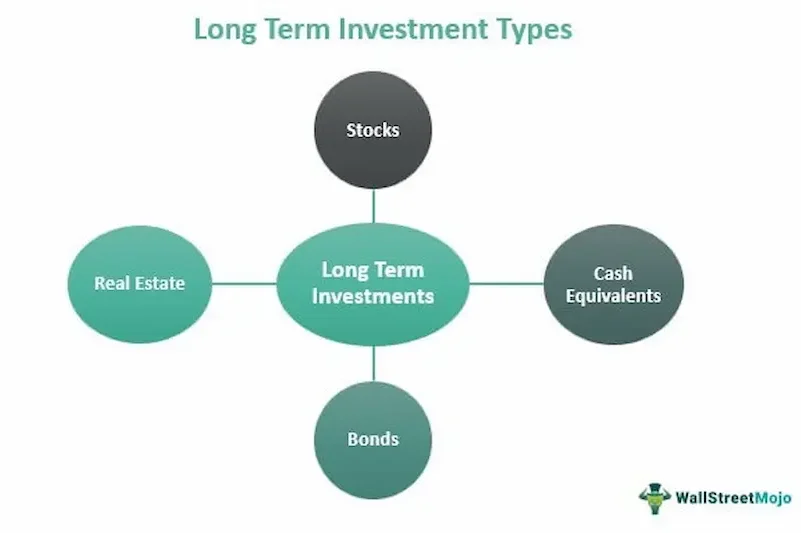
Long term investment plans come in various forms, each suited to different financial goals, risk tolerance, and investment horizons. Here are some of the most popular and beginner-friendly options:
1. Fixed Deposits (Long-Term FDs)
Long-term fixed deposits allow you to invest a lump sum for several years at a guaranteed interest rate. They are safe, low-risk, and provide predictable returns, making them ideal for conservative investors
2. Public Provident Fund (PPF)
PPF is a government-backed long-term investment plan that typically has a 15-year lock-in period. It offers tax benefits, guaranteed returns, and is excellent for retirement or long-term savings
3. National Pension Scheme (NPS) / Retirement Funds
NPS is designed for long-term retirement planning. Contributions are invested in a mix of equities, bonds, and government securities, giving growth potential while focusing on long-term wealth accumulation
4. Equity Mutual Funds (Long-Term SIPs)
Systematic Investment Plans (SIPs) in equity mutual funds are ideal for investors willing to take moderate risk. Over the long term, equity funds can offer higher returns compared to fixed-income options
5. Government Bonds
Government bonds are backed by the government, providing stable interest income over a set period. They are low-risk and suitable for investors seeking predictable long-term returns
6. Stocks with Long-Term Potential
Investing directly in carefully selected stocks can offer high growth over time. This option requires research and patience but can yield significant wealth when held for the long term
7. Real Estate
Real estate investments, such as residential or commercial property, can provide long-term capital appreciation and rental income. While less liquid, they are often considered a solid long-term investment
Key Takeaway
Diversifying your long-term investments across multiple options can help balance risk, maximize growth, and ensure financial stability over the years. Choosing the right combination depends on your goals, risk tolerance, and investment horizon
Key Features to Look For in Long Term Investment Plans
When choosing long term investment plans, it’s important to consider features that ensure both growth and security. Here are the key factors to keep in mind:
1. Time Horizon
Long-term investments typically span 5, 10, or more years. Choose a plan that aligns with your financial goals, whether it’s retirement, children’s education, or buying property
2. Risk Level
Assess the level of risk you are comfortable with. Fixed deposits and government bonds are low-risk, while equities and mutual funds carry moderate risk but offer higher growth potential
3. Expected Returns
Compare the potential returns of different investment options. Long-term plans often provide higher returns than short-term investments due to compounding and market growth
4. Liquidity
Check how easily you can access your money. Some long-term investments, like stocks and mutual funds, offer flexibility, while options like PPF or long-term FDs may have lock-in periods
5. Tax Benefits
Some long-term plans provide tax advantages, which can boost your overall returns. For example, PPF, NPS, and certain government bonds may offer tax exemptions
6. Inflation Protection
Ensure your investment grows faster than inflation to maintain purchasing power over time. Equity-based plans and some mutual funds often provide better protection against inflation than fixed deposits
7. Compounding Potential
Long-term investments benefit from compounding, where earnings generate additional earnings over time. The earlier you start, the more powerful compounding becomes
8. Diversification
Spreading your investments across multiple long-term options helps reduce risk and improve overall returns
By carefully evaluating these features, you can select a long-term investment plan that maximizes growth, protects your money, and aligns with your future financial goals
you may also like to read these posts;
How Personal Loans Work: Beginner’s Complete Guide
How to Check Loan Eligibility and Get Approved Quickly
Safe Loan Tips for Easy Approval and Smart Borrowing
Loan Approval Tips to Boost Your Approval Chances
Loan Basics for Beginners: Tips for Smart Borrowing
Benefits of Long Term Investment Plans
Long term investment plans offer several advantages that make them ideal for building wealth and securing your financial future. Here are the key benefits: long term investment plans
1. Higher Growth Potential
Investing for the long term allows your money to grow steadily. Plans like equity mutual funds, stocks, and real estate benefit from compounding and market growth, often yielding higher returns than short-term options long term investment plans
2. Reduced Impact of Market Volatility
Long-term investments are less affected by short-term market fluctuations. Staying invested over several years helps smooth out ups and downs, reducing risk long term investment plans
3. Encourages Financial Discipline
Regular contributions to long-term plans, like SIPs or recurring deposits, help develop consistent saving and investing habits
4. Helps Achieve Major Financial Goals
Long-term plans are ideal for retirement, children’s education, property purchases, or building a substantial wealth corpus long term investment plans
5. Tax Advantages
Many long-term plans, such as PPF, NPS, or certain government bonds, offer tax benefits, helping you maximize returns
6. Power of Compounding
Long-term investments allow earnings to generate additional earnings over time, significantly increasing wealth over years long term investment plans
7. Peace of Mind
Knowing that your investments are geared toward future financial security reduces stress and helps you plan with confidence
Key Takeaway:
Long-term investment plans are designed to grow your wealth steadily, reduce risk over time, and achieve financial goals. They are a cornerstone of a smart investment strategy for anyone planning for the future
Common Mistakes to Avoid in Long Term Investment Plans

Even long-term investment plans can underperform if you make common mistakes. Here are some pitfalls to watch out for:
1. Focusing Only on Short-Term Gains
Investing with a short-term mindset can lead to frequent buying and selling. Long-term plans work best when you stay invested patiently
2. Not Starting Early
Delaying long-term investments reduces the benefits of compounding. Starting early, even with small amounts, can grow significantly over time
3. Ignoring Risk Tolerance
Choosing investments that don’t match your comfort level can cause unnecessary stress. Assess your risk tolerance before selecting a plan
4. Lack of Diversification
Putting all your money into one type of investment increases risk. Diversify across stocks, bonds, mutual funds, and fixed-income options for better stability
5. Neglecting Inflation
Some investments may provide stable returns but fail to beat inflation. Ensure your long-term plans maintain purchasing power
6. Not Reviewing Performance
Even long-term investments should be monitored periodically. Adjust allocations if necessary to stay aligned with your goals
7. Early Withdrawals
Withdrawing money before maturity can reduce returns, incur penalties, or affect compounding benefits. Avoid early withdrawals unless absolutely necessary long term investment plans
Key Takeaway:
Avoiding these common mistakes ensures your long-term investment plans maximize growth, reduce risk, and help you achieve your financial goals efficiently
What is considered a long-term investment?
A long-term investment is typically held for 5 years or more. These plans focus on steady growth, capital appreciation, and achieving major financial goals
Which long-term investment is best?
The best option depends on your goals and risk tolerance. Popular choices include PPF, NPS, long-term FDs, equity mutual funds, government bonds, and real estate
Are long-term investments safe?
While no investment is completely risk-free, long-term plans reduce risk over time. Government-backed options and fixed deposits are very secure, while equities carry moderate risk
Conclusion
Long term investment plans are one of the most effective ways to grow wealth steadily and achieve financial security. By staying invested for several years, you can take advantage of compounding returns, reduce the impact of short-term market fluctuations, and reach major financial goals like retirement, children’s education, or property purchase
Choosing the right mix of investments—such as PPF, long-term FDs, government bonds, mutual funds, or real estate—based on your risk tolerance and goals ensures both growth and stability. Diversifying your portfolio further helps minimize risk and maximize returns long term investment plans
The key to long-term investing is patience, consistency, and discipline. Even small, regular contributions can grow substantially over time. By starting early and making informed decisions, you can build a solid financial future and enjoy the confidence that comes with smart, long-term planning