
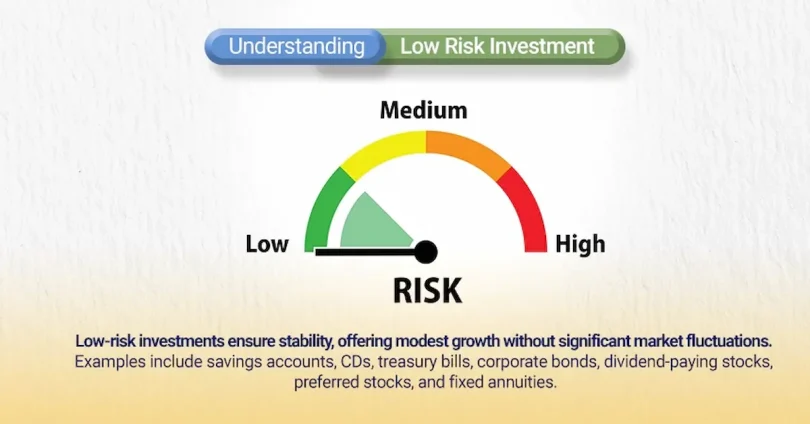

When it comes to investing, not everyone is comfortable taking big risks. Many people prefer stability, steady growth, and protection of their hard-earned money. That’s where low risk investment ideas come in. These investment options are designed to keep your capital safe while providing predictable and consistent returns over time.
Low-risk investments are ideal for beginners, retirees, conservative investors, or anyone saving for short-term goals. While they may not offer extremely high returns, they provide peace of mind and financial security. Instead of worrying about market ups and downs, you can focus on building wealth steadily and safely. low risk investment ideas
What Are Low Risk Investments?
Low risk investments are financial options designed to protect your original capital while providing steady and predictable returns. These investments focus on safety rather than high profits, making them ideal for people who prefer stability over uncertainty. They are commonly offered by banks, government institutions, or regulated financial organizations, which increases their reliability and security. low risk investment ideas
How Low Risk Investments Work
Low risk investments typically offer fixed or stable interest rates. This means you usually know in advance how much return you will receive over a specific period. Unlike stocks or high-risk assets, these investments are less affected by daily market fluctuations. Because of this lower volatility, your money remains more secure even during economic downturns. low risk investment ideas
Key Characteristics of Low Risk Investments
Low risk investments prioritize capital protection, ensuring that your initial amount remains safe. They provide consistent and moderate returns rather than large but unpredictable gains. These investments also tend to be easier to understand and manage, making them suitable for beginners. Many options offer flexible terms, allowing investors to choose short, medium, or long-term durations based on their financial goals. low risk investment ideas
Who Should Consider Low Risk Investments?
Low risk investment ideas are ideal for beginners who are just starting their investment journey and want to avoid major losses. They are also suitable for retirees who need stable income without exposure to market volatility. Conservative investors and individuals saving for short-term goals, such as buying a car or planning a vacation, can also benefit from these safe options. low risk investment ideas
Benefits of Low Risk Investments
One major benefit is peace of mind. Since these investments are stable, you don’t have to worry about sudden market crashes affecting your savings. They also help in financial planning because returns are predictable. Additionally, they can serve as a foundation for a diversified portfolio, balancing higher-risk investments. low risk investment ideas
Important Considerations
While low risk investments offer safety, they generally provide lower returns compared to high-risk investments like stocks or equity funds. Some options may struggle to beat inflation over the long term. That’s why it’s important to choose wisely and, if possible, combine multiple investment types for better overall results. low risk investment ideas
In summary, low risk investments are a smart choice for anyone who values security, steady growth, and financial stability over rapid but uncertain gains.
Why Choose Low Risk Investment Ideas?
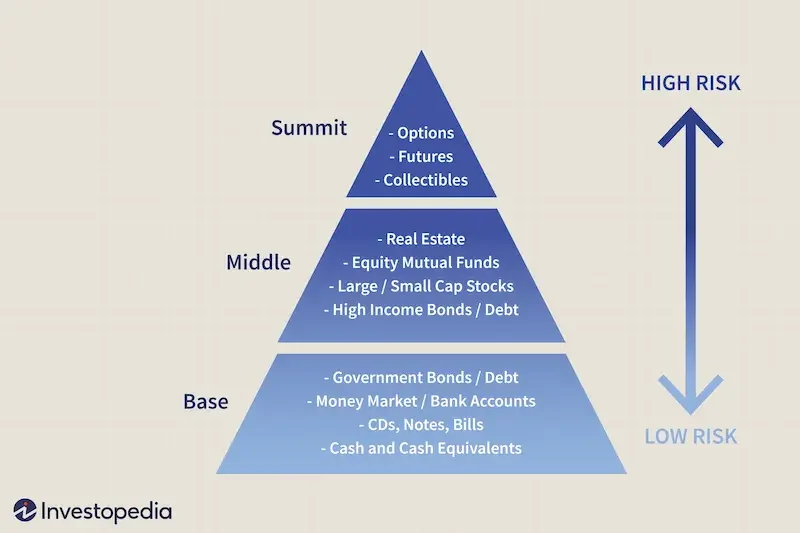
Choosing low risk investment ideas is a smart decision for individuals who value financial security and stability. While high-risk investments may offer higher returns, they also come with greater chances of loss. Low-risk options, on the other hand, focus on protecting your money while delivering steady and predictable growth. low risk investment ideas
Capital Protection
One of the biggest reasons to choose low-risk investments is capital safety. These options are designed to protect your original investment amount, reducing the chances of losing your hard-earned money. This makes them especially attractive for cautious low risk investment ideas investors.
Stable and Predictable Returns
Low-risk investments usually offer fixed or consistent returns. Knowing how much you will earn over time makes financial planning easier and more reliable. This stability helps you manage your future expenses with confidence. low risk investment ideas
Reduced Market Volatility
Unlike stocks and other high-risk assets, low-risk investments are less affected by sudden market changes. This means you don’t have to worry about frequent ups and downs in your investment value. low risk investment ideas
Ideal for Beginners
If you are new to investing, starting with low-risk investment ideas can help you understand how investments work without exposing yourself to large losses. They provide a safe learning experience while still generating returns. low risk investment ideas
Suitable for Short-Term Goals
Low-risk investments are perfect for saving toward short-term goals such as vacations, weddings, home renovations, or building an emergency fund. Since the returns are stable, you can plan your finances more effectively. low risk investment ideas
Peace of Mind
Financial stress can be overwhelming. Low-risk investments provide peace of mind because your money is relatively secure. This allows you to focus on long-term financial growth without unnecessary worry. low risk investment ideas
In summary, low risk investment ideas are ideal for individuals who prioritize safety, consistent returns, and financial stability over high but uncertain profits. Why Choose Low Risk Investment
you may also like to read these posts;
How Personal Loans Work: Beginner’s Complete Guide
How to Check Loan Eligibility and Get Approved Quickly
Safe Loan Tips for Easy Approval and Smart Borrowing
Loan Approval Tips to Boost Your Approval Chances
Loan Basics for Beginners: Tips for Smart Borrowing
How to Choose the Right Low Risk Investment

High-yield savings accounts provide interest rates much higher than traditional savings accounts while keeping your money safe and liquid. Many online banks offer rates that outperform physical bank branches. Look for accounts with no monthly fees and FDIC insurance for added security. Benefits: Money grows steadily, easily accessible, insured against bank failure, low risk. Tips: Compare rates across banks, check minimum balance requirements, consider online banks for better returns. Best for: Emergency funds, short-term savings, or keeping money safe while earning interest.
2. Fixed Deposits (FDs)
Fixed deposits are time-bound investments where you deposit money for a fixed term, earning guaranteed interest. The longer the term, the higher the interest rate in most banks. Some banks offer flexible FDs where you can partially withdraw funds without losing interest. Benefits: Guaranteed returns, predictable income, principal safety, low risk. Tips: Ladder multiple FDs to access money periodically, choose FDs from reputed banks, consider tax-saving FDs if applicable. Best for: Conservative investors, long-term savings, retirement planning.
3. Government Bonds
Government bonds are issued by the government and are considered extremely safe as they are backed by the national treasury. They provide fixed interest payments at regular intervals, with the principal returned at maturity. Examples include treasury bills, savings bonds, and long-term sovereign bonds. Benefits: Very low risk, predictable income, protection of principal. Tips: Look at bond maturity dates to match your financial goals, consider inflation-protected bonds to maintain purchasing power. Best for: Long-term stability, conservative investors, secure retirement planning.
4. Money Market Funds
Money market funds invest in high-quality, short-term financial instruments like treasury bills, commercial paper, and certificates of deposit. These funds are highly liquid and typically offer better returns than a regular savings account while maintaining low risk. Benefits: Low risk, high liquidity, modest growth, easy to manage. Tips: Check the fund’s historical performance and expense ratio, consider automatic reinvestment for compounding. Best for: Safety-conscious investors who need quick access to cash, short-term goals.
5. Certificates of Deposit (CDs)
Certificates of Deposit lock your money for a specific period, usually ranging from a few months to several years, in exchange for a higher interest rate than savings accounts. Early withdrawal may incur penalties, so it’s best for money you won’t need immediately. Benefits: Predictable earnings, fixed returns, low volatility. Tips: Use a CD laddering strategy to maintain liquidity while maximizing interest, compare rates across banks for the best deal. Best for: Medium-term goals, planned expenses, building secure savings.
6. Dividend-Paying Blue-Chip Stocks
Large, stable companies with a history of paying dividends provide a balance between low risk and income generation. Dividends are often paid quarterly and can be reinvested to grow wealth over time. Companies with a long track record of profitability and market stability reduce volatility compared to smaller stocks. Benefits: Steady income, potential for capital growth, lower risk than smaller companies. Tips: Focus on companies with a strong dividend history, diversify across sectors, reinvest dividends for compounding. Best for: Investors seeking steady returns plus moderate growth, building long-term wealth.
7. Real Estate Investment Trusts (REITs)
REITs allow individuals to invest in real estate projects such as commercial buildings, residential complexes, or warehouses without directly owning property. REITs often pay consistent dividends from rental income and offer a way to diversify your portfolio. Benefits: Passive income, diversification, exposure to real estate without direct management. Tips: Check the REIT’s portfolio quality, dividend yield, and performance history, consider REITs listed on stock exchanges for easier buying and selling. Best for: Investors seeking steady dividends, portfolio diversification, exposure to real estate markets.
8. Treasury Inflation-Protected Securities (TIPS)
TIPS are government-issued bonds that protect against inflation. The principal increases with inflation, and interest is paid on the adjusted principal. This ensures your investment maintains its purchasing power even during rising prices. Benefits: Low risk, inflation protection, predictable returns. Tips: Ideal for long-term investors worried about inflation eroding savings, combine with other low-risk options for diversification. Best for: Inflation-conscious, conservative investors, long-term financial security.
9. Short-Term Municipal Bonds
Municipal bonds are issued by local governments or municipalities to fund public projects. Short-term bonds have maturities under five years and are generally safe with tax advantages in many regions. Benefits: Low risk, steady interest income, potential tax exemptions. Tips: Check credit ratings of the issuing municipality, focus on short-term bonds for less interest rate risk. Best for: Investors looking for safe, tax-advantaged income.
Are low risk investments completely safe?
No investment is 100% risk-free, but low risk investments like government bonds, high-yield savings accounts, and FDs have minimal chances of losing your principal. They are much safer than stocks or cryptocurrencies.
What is the safest low risk investment option?
Government-backed securities such as treasury bonds or TIPS are considered the safest, followed by insured savings accounts and fixed deposits.
Can low risk investments beat inflation?
Some low risk options, like TIPS or high-yield savings accounts, are designed to protect against inflation, but many traditional fixed deposits or standard bonds may earn returns slightly below inflation. Diversifying your investments helps maintain purchasing power.
Conclusion
Low risk investments are an excellent way to grow your money safely while minimizing stress and protecting your principal. Options like high-yield savings accounts, fixed deposits, government bonds, and dividend-paying stocks provide predictable returns and financial security. By understanding your goals, time horizon, and liquidity needs, you can choose the right combination of low risk investments to suit your lifestyle. Remember, even small, consistent investments can grow over time, and diversifying across multiple low risk options ensures steady growth and stability. Start investing today and enjoy the peace of mind that comes with smart, safe financial planning.